In the ever-evolving world of artificial intelligence, two heavyweights are making waves: ChatGPT and Google Gemini. While both aim to revolutionize the way we interact with technology, they each bring their unique flair to the table. Think of ChatGPT as the friendly neighbor who always has the right words at the right time, while Google Gemini struts in like the tech-savvy cousin who knows all the latest trends.
Overview of ChatGPT and Google Gemini
ChatGPT offers an engaging and intuitive conversational experience. It excels in understanding context and generating human-like responses. Users often find interactions with ChatGPT seamless and enjoyable.
In contrast, Google Gemini focuses on leveraging advanced data processing capabilities. The platform emphasizes efficiency and accuracy in retrieving information and assisting with more complex queries. Users experience its tech-savvy nature through rapid responses backed by substantial data analysis.
Both platforms feature distinct approaches to artificial intelligence. ChatGPT prioritizes conversational abilities while maintaining a friendly user interface. Google Gemini streamlines user experience by integrating the latest technological advancements.
Developers consistently refine ChatGPT’s algorithms, enhancing its engagement capabilities. Likewise, Google Gemini evolves by incorporating real-time data and refined machine learning models, improving its performance in various scenarios.
ChatGPT has a strong community of users who contribute to its ongoing development. In comparison, Google Gemini taps into Google’s vast ecosystem, providing users access to an array of interconnected services. Each platform maintains a unique identity while competing in the AI landscape.
Understanding these differences enables potential users to choose the right platform for their needs. Both ChatGPT and Google Gemini continue to shape the future of technology interactions, fostering significant advancements in AI.
Key Features Comparison
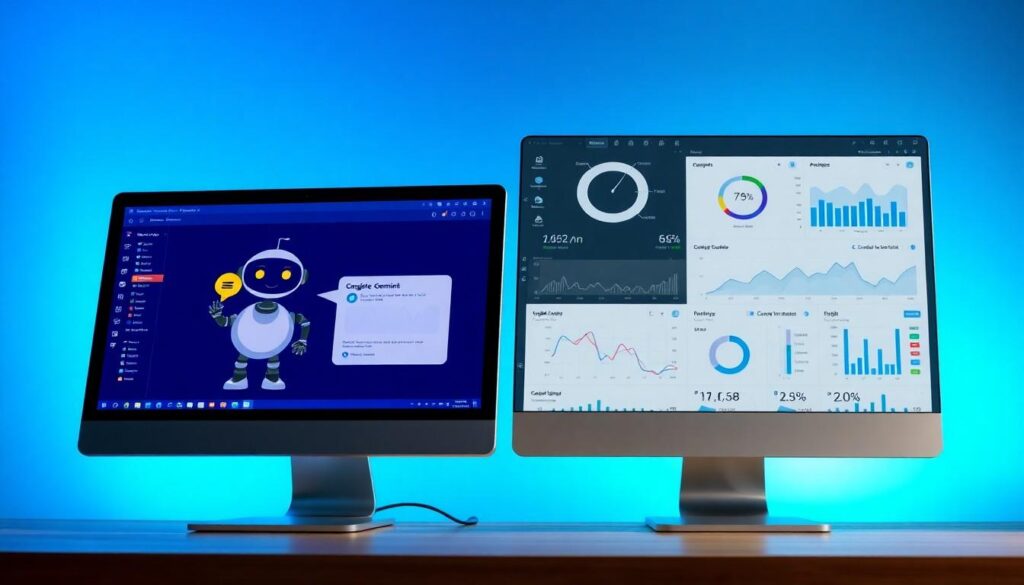
ChatGPT and Google Gemini showcase distinct characteristics that cater to different user preferences and needs. Understanding these features provides insight into how these AI platforms operate.
ChatGPT Features
ChatGPT emphasizes conversational engagement. It effectively understands context, allowing for natural and fluid interactions. Users benefit from its ability to generate informative and human-like responses. People find ChatGPT intuitive thanks to its user-friendly interface. Regular updates enhance its conversational skills, driven by community feedback. The platform supports diverse topics, allowing broad applications in casual and professional contexts.
Google Gemini Features
Google Gemini focuses on data processing efficiency. It excels in retrieving vast information quickly, responding to complex queries with precision. Users experience rapid answers through its advanced machine learning capabilities. Integration within the Google ecosystem enables seamless access to additional services. Regular updates incorporate real-time data, ensuring accuracy in responses. Its design prioritizes functionality, making it suitable for users seeking reliable and efficient assistance.
Performance Analysis
Examining performance differences between ChatGPT and Google Gemini reveals distinct strengths in each platform.
Speed and Efficiency
ChatGPT excels in conversational flow, delivering responses swiftly during interactions. Users experience minimal lag, fostering a dynamic exchange. Google Gemini, conversely, emphasizes rapid information retrieval. Leveraging vast data sources, it can swiftly process complex queries with impressive speed. Both platforms respond quickly, yet their methods differ. ChatGPT prioritizes human-like dialogue, while Google Gemini focuses on delivering data-driven answers efficiently. For users, this distinction can significantly impact the interaction experience depending on whether they seek casual conversation or data-intensive queries.
Accuracy and Reliability
Accuracy stands out as a crucial factor in evaluating performance. ChatGPT provides contextually relevant information, ensuring that conversations remain on track and coherent. Users appreciate its ability to understand subtle nuances in dialogue. Google Gemini offers reliable fact-based responses, sourcing data from extensive Google databases. This approach enhances precision for users needing factual information quickly. While ChatGPT nurtures a conversational tone, Google Gemini guarantees the veracity of its data outputs. Reliability ultimately hinges on user requirements, whether engaging in casual chats or requiring exact information for decision-making.
User Experience
User experience varies significantly between ChatGPT and Google Gemini. Each platform offers distinct interfaces and accessibility features, catering to different user preferences.
Interface Design
ChatGPT showcases a user-friendly interface designed for conversational ease. Engaging visuals and simple navigation enhance the interaction flow. Google Gemini, in contrast, features a data-centric design that prioritizes quick access to information. Clarity and efficiency dominate its layout, streamlining complex queries. Both interfaces focus on optimizing user engagement, yet each reflects the core strengths of its platform.
Accessibility
Accessibility across these platforms varies notably. ChatGPT focuses on natural language processing, enabling users to interact verbally or through text without barriers. Inclusivity remains a priority, ensuring diverse user needs are met. Google Gemini emphasizes integration across multiple devices, providing seamless access in various environments. It supports quick information retrieval regardless of the user’s location. These features ensure users interact with their preferred platform in comfortable, effective ways.
Practical Applications
Both ChatGPT and Google Gemini show distinct use cases across various fields.
Use Cases for ChatGPT
ChatGPT thrives in customer service scenarios, providing instant responses to inquiries. It serves as a virtual assistant, handling scheduling and reminders efficiently. Educational tools also benefit from ChatGPT, where it helps students by providing explanations and tutoring in various subjects. Content creation sees enhanced productivity through tools integrating ChatGPT to assist writers with brainstorming ideas. Additionally, interactive storytelling engages users, creating personalized narratives based on user input.
Use Cases for Google Gemini
Google Gemini excels in research environments, streamlining data retrieval for complex queries. It assists professionals with rapid access to extensive information, making it ideal for academic research and analytics. Businesses leverage Google Gemini for market analysis, quickly synthesizing data for informed decision-making. Technical support also benefits from its precision, accurately diagnosing issues based on information patterns. Integration with other Google services enhances its functionality, further improving collaboration across applications.
The competition between ChatGPT and Google Gemini highlights the diverse capabilities of AI platforms. ChatGPT stands out for its conversational prowess and user-friendly design, making interactions feel natural and engaging. On the other hand, Google Gemini excels in data processing and efficient information retrieval, catering to users who prioritize speed and accuracy.
As both platforms evolve, they continue to redefine user experiences in their respective domains. Understanding their unique strengths allows users to select the best fit for their specific needs, whether it’s for casual conversation or complex data analysis. The future of AI interactions looks promising as these technologies advance, offering tailored solutions for various applications.